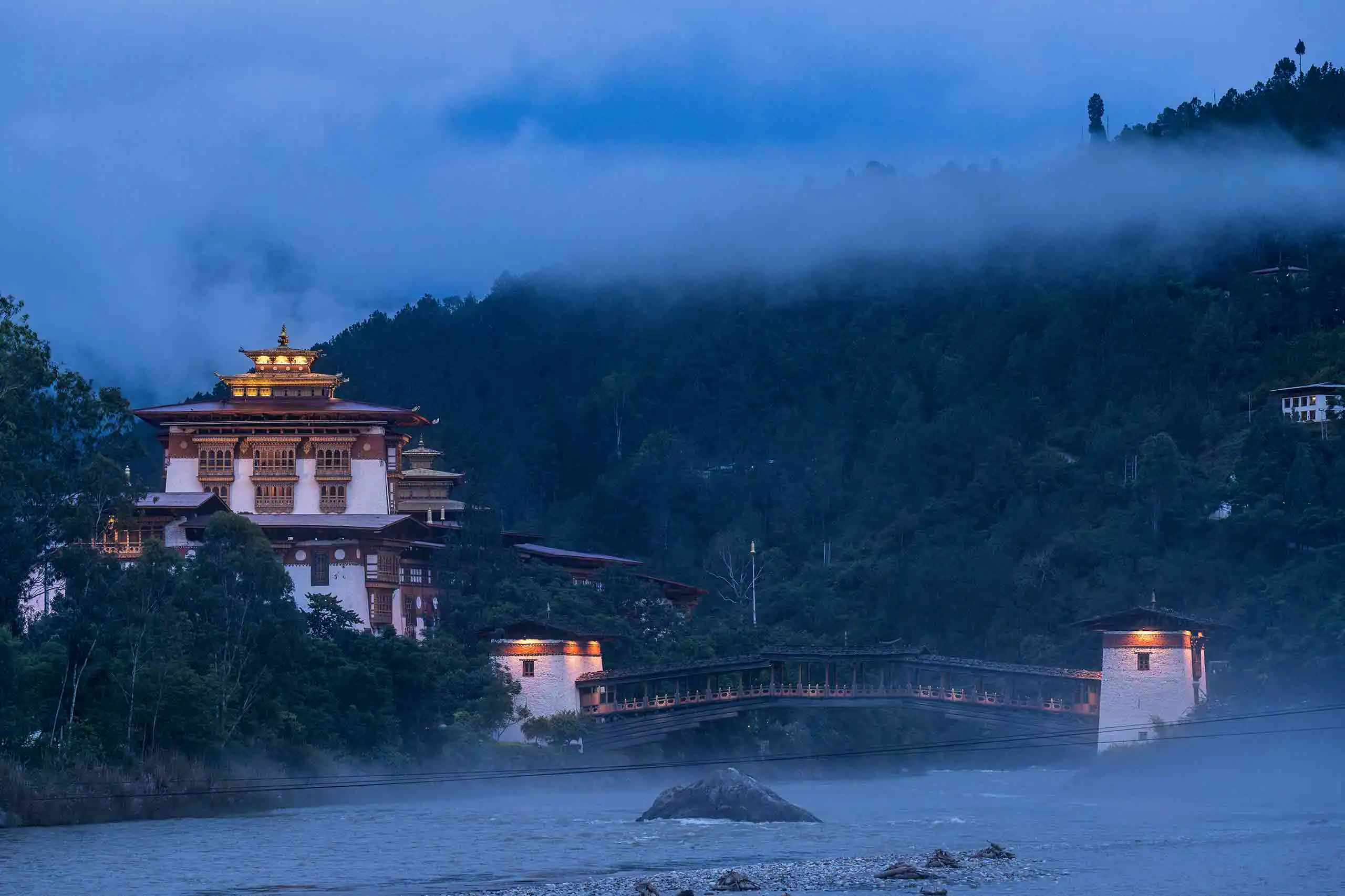
Bhutan sits landlocked in the eastern Himalayas, between India and China's Tibet Autonomous Region, and never opened to foreign tourism until 1974. Half a century on, it remains the only carbon-negative country on Earth and the only one to place happiness — not GDP — at the center of national policy. There is no traffic light in the entire country, no McDonald's, no billboard advertising. What there is instead: fortress-monasteries a thousand years old, forest covering three-quarters of the land, and a culture that has had the rare chance to develop entirely on its own terms.
Kingdom Of
Peaks & Dzongs
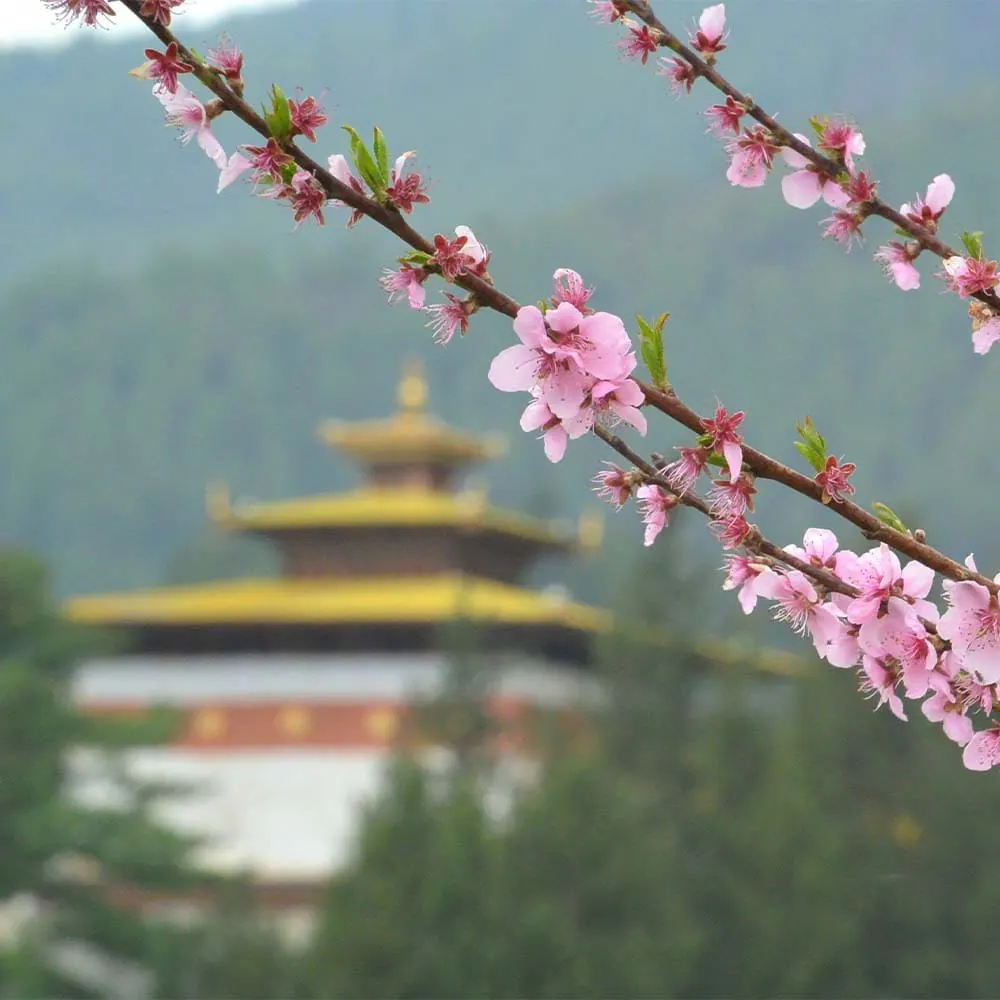
Bhutan calls itself Druk Yul — Land of the Thunder Dragon — after the thunder that rolls through its high valleys and the dragon that appears on its flag. The terrain climbs from subtropical plains near the Indian border to Himalayan peaks over 7,000 meters in the north, and almost every dzongkhag (district) in between holds its own dialect, dress, and dzong.
Vajrayana Buddhism shapes daily life here more visibly than almost anywhere else left in the world — in the prayer flags strung across mountain passes, the chorten at every village entrance, and the tshechu festivals that still draw entire communities to their district dzong each year.
Since the 1970s, Bhutan has weighed policy against four pillars — sustainable development, environmental conservation, cultural preservation, and good governance — rather than economic output alone.
The constitution mandates at least 60% forest cover for all time. Bhutan's forests absorb several times more carbon than the entire country emits, making it the world's only carbon-negative nation.
Tourism is deliberately kept small and unhurried. A Sustainable Development Fee funds free healthcare, education, and conservation for Bhutanese citizens — every visitor contributes directly to the country they've come to see.
Share a little about how you'd like to feel, and our team will shape a private Bhutan journey around it — no templates, no packages.